
Ethics committee
Ethics committees in the higher education sector are independent bodies set up at public universities, private universities and universities of applied science, which primarily examine and critically evaluate applied research on humans.
In the hospital sector, ethics committees are provided for by the federal regulation in section 8c of the KaKuG (Austrian Federal Hospitals and Health Clinics Act). In section 30 UG (Austrian Universities Act 2002), this obligation is applies to medical universities or universities at which a medical department is established.
In addition, as the question of ethical compatibility and professional responsibility for certain studies and research is becoming increasingly important these days, other public universities and private universities have also set up ethics committees or ethics advisory boards. The ethical principles of the European Charter for Researchers and other international standards are also observed. The area of responsibility and the composition of the committee are regulated autonomously in the rules of procedure and reflect their research focus.
A distinction must be made between ethics committees and institutions at some universities that offer support for students and academics on issues relating to research ethics and research integrity. As a rule, however, research projects are not examined.
For the purposes of the points mentioned in regard to the tasks of the committee, DPU introduces a voluntary committee for academic integrity and ethics (Ethics Committee or EC).
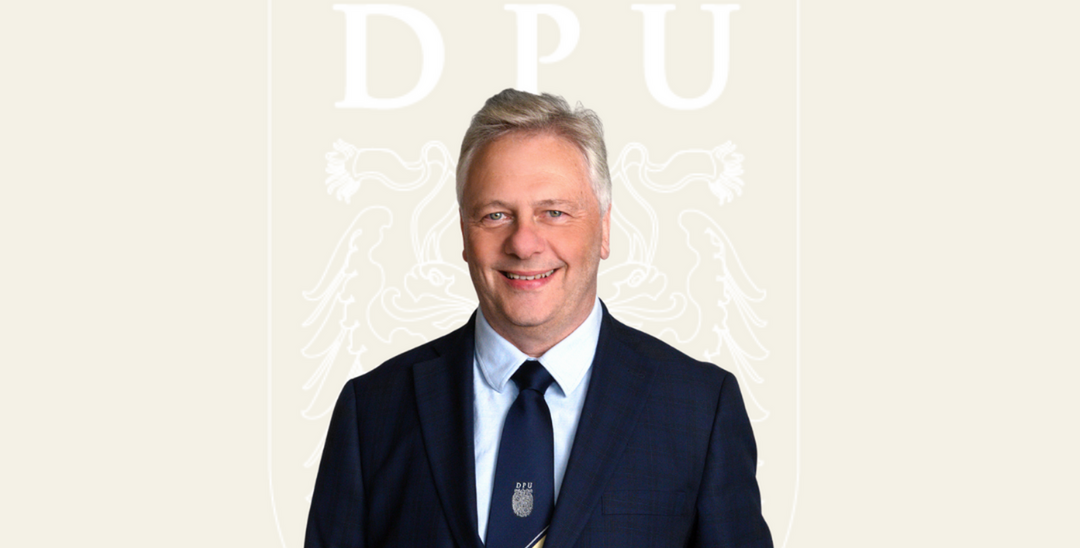
Univ.-Prof. Mag. Dr. PhDr. Wilhelm Frank, MLSv
Leader of the Commission on Research Integrity and Ethics
Contact: ethikkommission@dp-uni.ac.at